The 16 Best Creator Monetization Platforms [2026]
![The 16 Best Creator Monetization Platforms [2026]](/content/images/size/w1200/2026/02/1--1-.jpg)
The creator economy has become a meaningful source of income for people building audiences online. The richest creators across Instagram, TikTok, and YouTube earned an estimated $853 million in a single year, which shows just how much revenue is being generated through creator-led platforms.
For creators, monetization often means juggling subscriptions, digital products, exclusive content, and fan support across multiple tools and platforms. Each option comes with different fees, features, and trade-offs, and the platform you choose can directly affect how you earn and how much control you have over your content and audience.
This guide breaks down the best creator monetization platforms in 2026, outlining what each platform does well, where it may fall short, and who it’s best suited for, so you can compare your options and make a more informed decision.
How Does Content Monetization Work?
Content monetization is the process of earning income from content by offering audiences ways to pay for access, value, or convenience. This can include recurring subscriptions, one-time purchases, tips, ad revenue, or paid access to exclusive content. Most creator monetization platforms handle payments, access control, and payouts, allowing creators to focus on producing content while building sustainable revenue streams. Understanding who is creating content and how they monetize it helps clarify which platforms make the most sense.
Types of Creators
Creators produce content in many formats, and how they monetize often depends on how they connect with their audience and deliver value. Below are some of the most common types of creators and how they typically operate.
- Streamers create live content on platforms like Twitch, YouTube, or Kick, often monetizing through subscriptions, tips, memberships, and exclusive live or replay access.
- Bloggers and writers publish long-form written content, articles, or newsletters, and usually earn through subscriptions, paid posts, affiliate links, or digital products.
- Video creators focus on short-form or long-form video content across platforms like YouTube, TikTok, and Instagram, monetizing through ads, subscriptions, brand deals, and gated content.
- Podcasters produce audio content for on-demand or live listening, often earning through listener subscriptions, premium episodes, sponsorships, and bundled memberships.
- Educators and coaches create instructional content, courses, or workshops, and typically monetize through course sales, memberships, and one-on-one access.
Many creators fall into more than one category, which is why choosing a platform that supports multiple content types and monetization models is often important.
Types of Monetization
Creators can earn income in several ways, often using multiple methods simultaneously. The most common monetization models are built around access, value, or convenience for the audience. Subscriptions provide recurring revenue in exchange for ongoing content or perks, while one-time purchases include digital products, courses, or pay-per-content access. Tips and donations allow fans to offer direct support without a long-term commitment. Some platforms also enable ad revenue sharing or brand partnerships. Using a mix of monetization options helps creators diversify income and reduce reliance on a single revenue stream.
Earning Potential
How much you can earn as a creator depends on more than follower count. Engagement plays a big role, since a smaller, actively engaged audience often converts better than a larger, passive one. The type of content you offer matters too. Live streams, exclusive posts, and direct access typically perform better than content that feels easy to replace.
Creators who give fans multiple ways to support them tend to earn more consistently. Using a platform like Passes makes this easier by keeping memberships, paid messages, livestream tips, and digital products in one place. Over time, clear pricing, consistent posting, and a strong value proposition can have a real impact on earnings.
Understanding Creator Monetization Platforms
Creator monetization platforms are tools designed to help creators earn directly from their audience. Instead of relying only on ads or brand deals, these platforms provide built-in ways to sell access, content, and experiences. They handle payments, access control, and payouts, which simplifies the process of turning content into revenue and allows creators to manage their business from one place.
Key Features of a Good Creator Platform
A good creator monetization platform should simplify how you earn while giving you control over your content, pricing, and audience relationships. The most effective platforms combine flexibility with tools that scale as your business grows.
- Multiple monetization options, such as subscriptions, one-time purchases, tips, or gated content, so you are not limited to a single revenue stream
- Reliable payments and transparent fees, with clear payout timelines and no hidden costs
- Audience engagement tools like messaging, livestreaming, or comments that help deepen fan relationships
- Customization and branding control so your page feels like an extension of your brand, not the platform’s
- Scalability and ease of use, allowing you to manage more content and fans without adding unnecessary complexity
How Creator Platforms Support Content Creation
Creator platforms do more than handle payments. They also support the day-to-day work of creating and sharing content. Most platforms provide tools to upload, organize, and gate content so creators can control who sees what and when. Features like scheduling, analytics, and audience management help creators understand what performs well and plan future content more effectively.
Many platforms also reduce operational overhead by consolidating access, messaging, and delivery in a single place. This allows creators to spend less time on manual tasks and more time creating. When content creation and monetization live within the same system, it becomes easier to stay consistent, experiment with new formats, and scale without adding extra tools.
The Best Creator Monetization Platforms
The best creator monetization platform depends on the type of content you create and how you want to earn. A blogger selling digital downloads has different needs than a streamer offering memberships, livestream access, and paid messages.
To build this list, we compared creator monetization platforms across the most common earning models, including subscriptions and memberships, pay-per-content, tips, digital products, livestreaming, and community features. We also looked at pricing and fees, setup time, how well each platform handles payments and access, and how smooth the experience is for both creators and fans.
1. Passes
Overview:
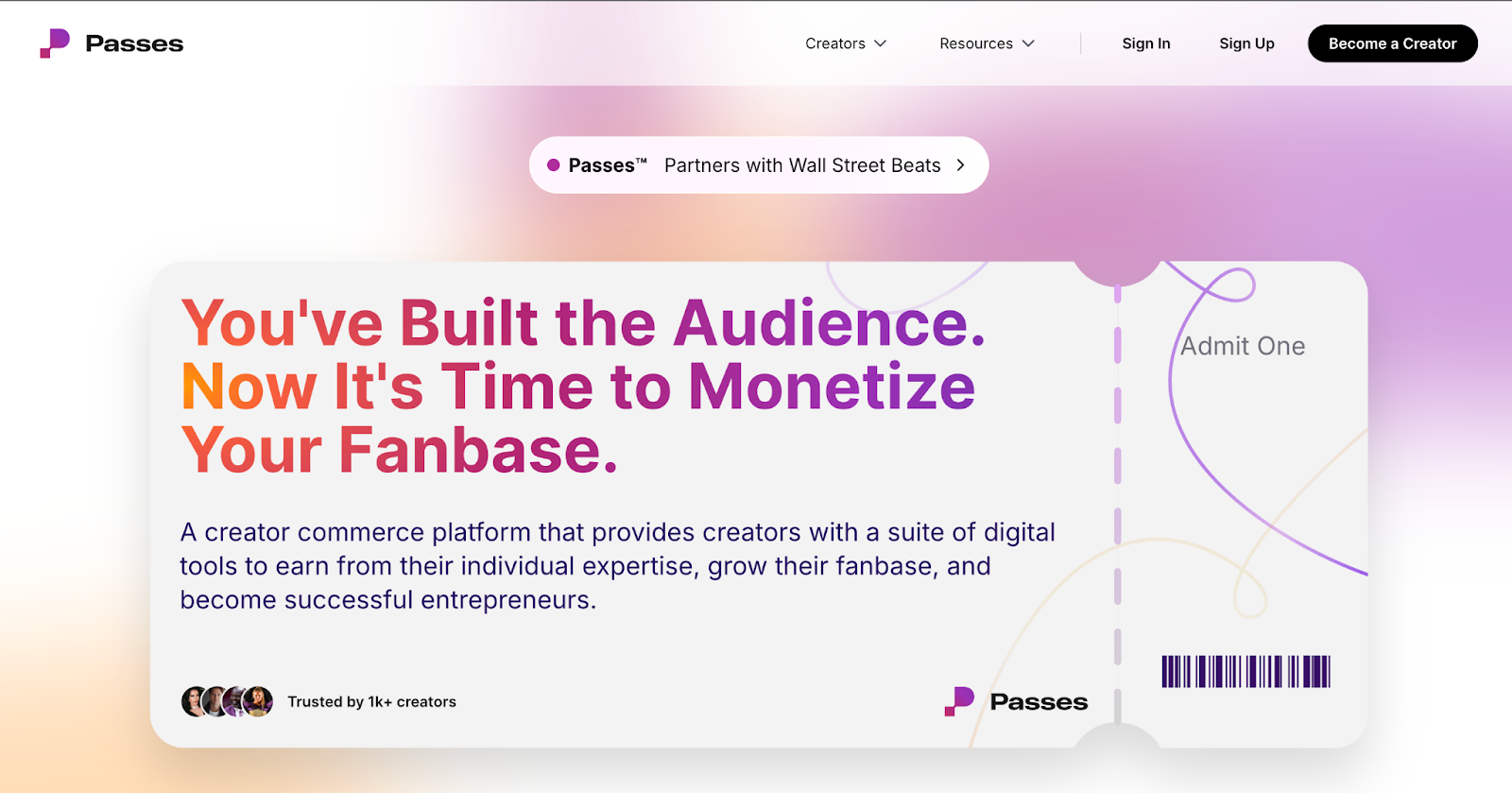
Passes is a creator commerce platform built for creators who already have traction and want to turn audience attention into a reliable income. It focuses on direct, creator-owned relationships rather than algorithm-driven reach, with tools that support recurring revenue and deeper fan interaction. The platform is designed for creators who are treating content as a serious business.
Best for:
Creators with established audiences who want to monetize through direct fan access, memberships, and real-time interaction without relying on ads or brand deals.
Pros:
- Supports multiple revenue streams in one platform, including memberships, subscriptions, paid DMs, livestreams, group chats, and a marketplace
- Enables creators to earn directly from one-on-one fan conversations through paid direct messages
- Offers pay-per-minute 1:1 calls while keeping personal contact information private
- Includes strong content protection with screenshot blocking, unique watermarks, and DMCA takedown support
- Keeps fees straightforward, allowing creators to retain roughly 90 percent of earnings
Cons:
- Does not allow nudity or adult content
- Requires at least 100,000 followers across social media accounts, with exceptions reviewed on a case-by-case basis
2. Gumroad
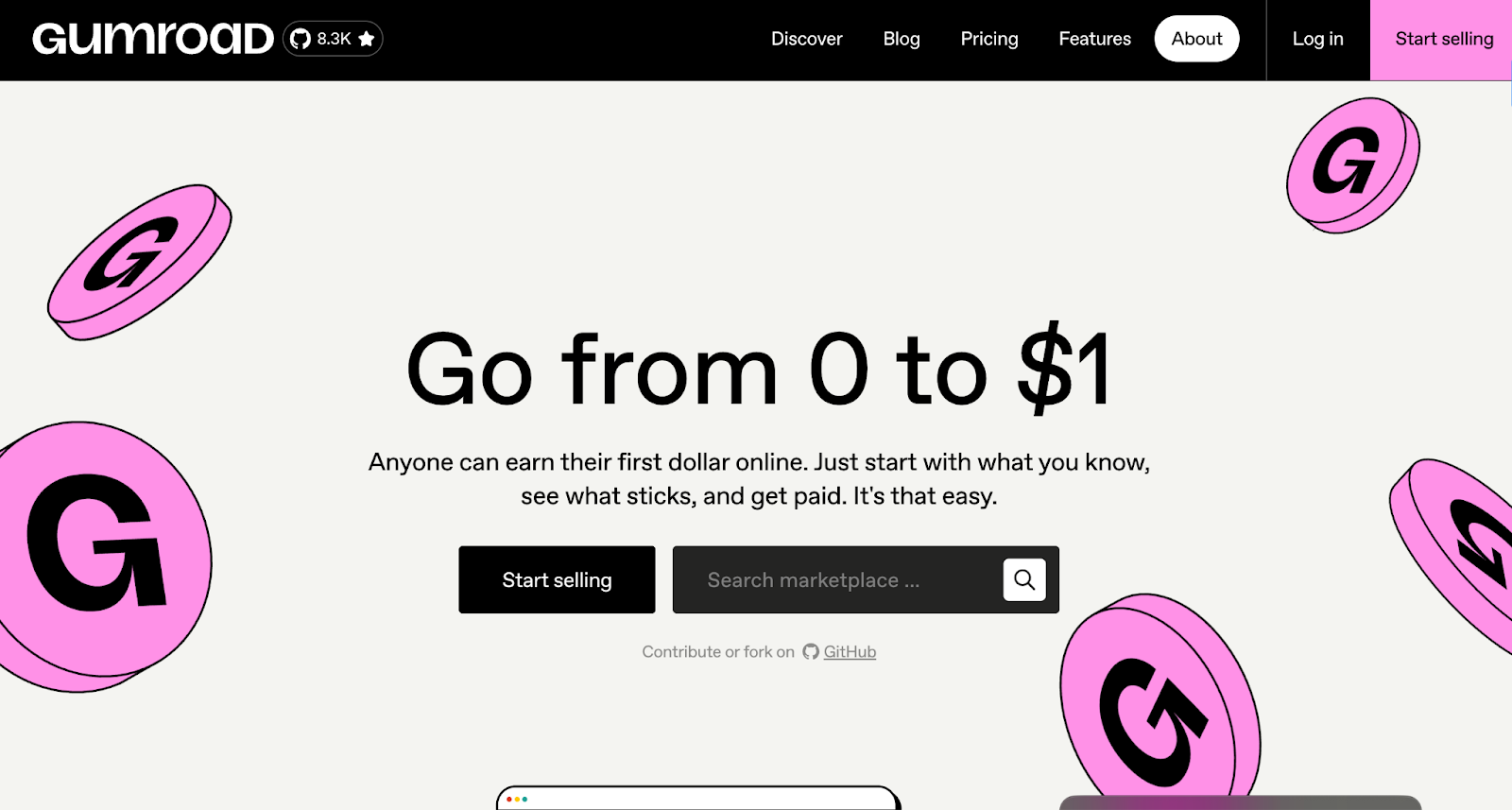
Overview: Gumroad is a creator commerce platform that allows creators to sell digital products and subscriptions directly to their audience. It provides a hosted storefront, payment processing across multiple currencies, and file delivery or gated access. Creators can sell through Gumroad product pages, embed checkout on their own sites, and connect the platform to other tools through integrations.
Best for: Digital product sales
Pros:
- Supports selling digital products and subscriptions with built-in payment processing
- Provides a storefront as well as embeddable checkout options
- Includes analytics and reporting for tracking sales and customer activity
- Supports discounts, affiliates, and automated workflows
Cons:
- Responds slowly in some support cases and relies heavily on automated replies
- Complains of personal data theft
- Removes published content in some cases without clear explanation
3. Instagram Creator Studio
Overview: Instagram Creator Studio provides creators with tools to manage content, view performance insights, and access monetization features across Instagram. It supports publishing, analytics, and audience insights, helping creators track how their content performs and how followers engage. Monetization options are tied directly to Instagram’s ecosystem and eligibility requirements.
Best for: Visual and short-form content creators building audiences on Instagram
Pros:
- Provides analytics and insights for posts, Reels, Stories, and live content
- Supports monetization features such as subscriptions, badges, gifts, and bonuses for eligible creators
- Allows creators to manage and publish content within the Instagram ecosystem
- Integrates directly with Instagram’s audience and discovery features
Cons:
- Has an unresponsive support system, which often forces users to seek help outside the platform
- Randomly suspends or bans accounts without clear explanation or warning
4. Kajabi
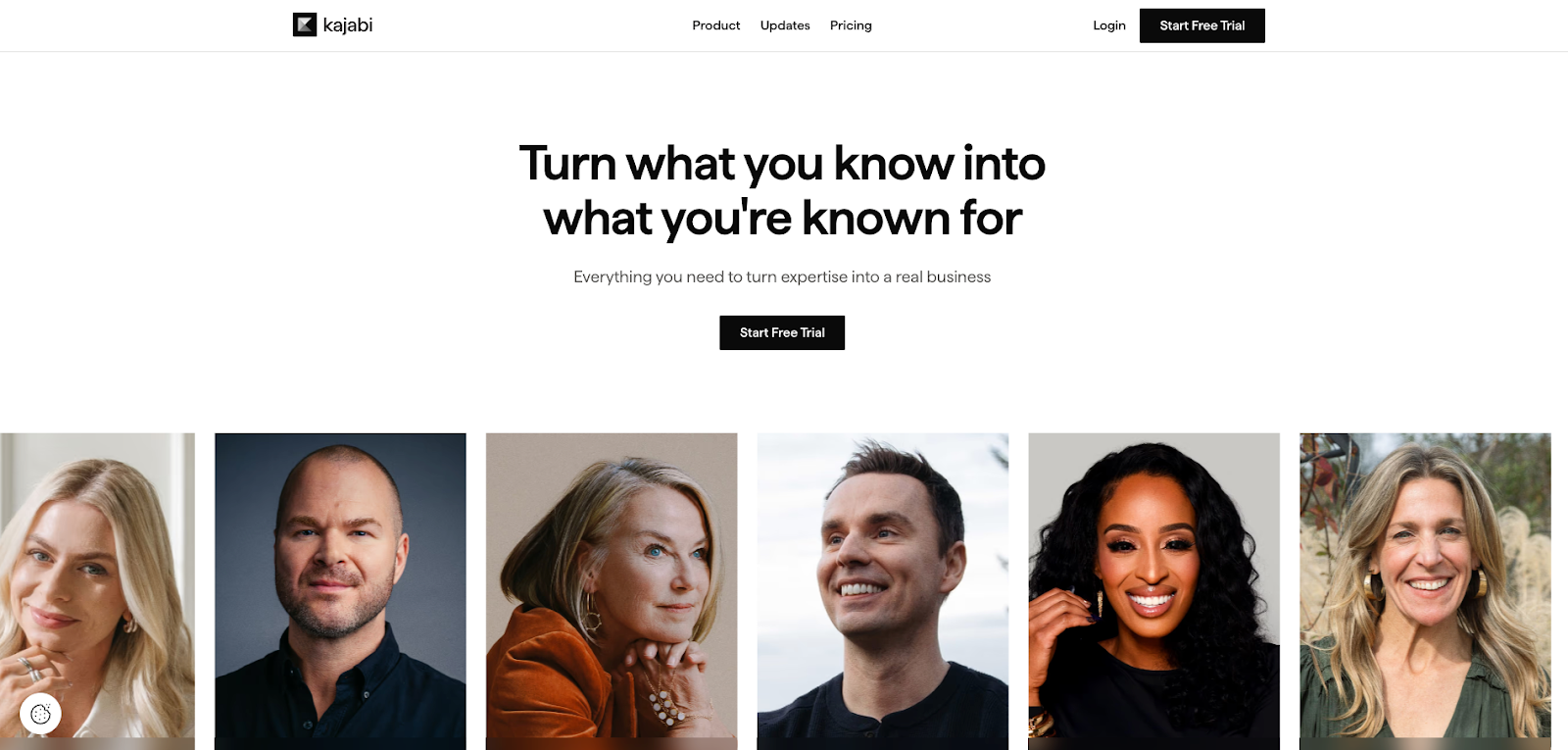
Overview: Kajabi is an all-in-one platform designed for creators and experts who sell knowledge-based products. It combines course hosting, memberships, coaching, email marketing, payments, and automation into a single system. Kajabi is positioned as a centralized operating system for running a creator-led business rather than a standalone monetization tool.
Best for: All-in-one digital businesses
Pros:
- Supports multiple product types, including courses, memberships, coaching, downloads, newsletters, and podcasts
- Combines content delivery, payments, email marketing, and automation in one platform
- Includes tools for subscriptions, one-time payments, upsells, and affiliate programs
- Provides integrations, APIs, and webhooks for connecting external tools
Cons:
- Has support issues where product or page errors may require creators to manually rebuild content, even during active launches
- Shows limited flexibility around billing and refunds, even in exceptional personal circumstances
- Has reported bugs in its community features and moderates or limits critical feedback within its owned community spaces
5. Ko-fi
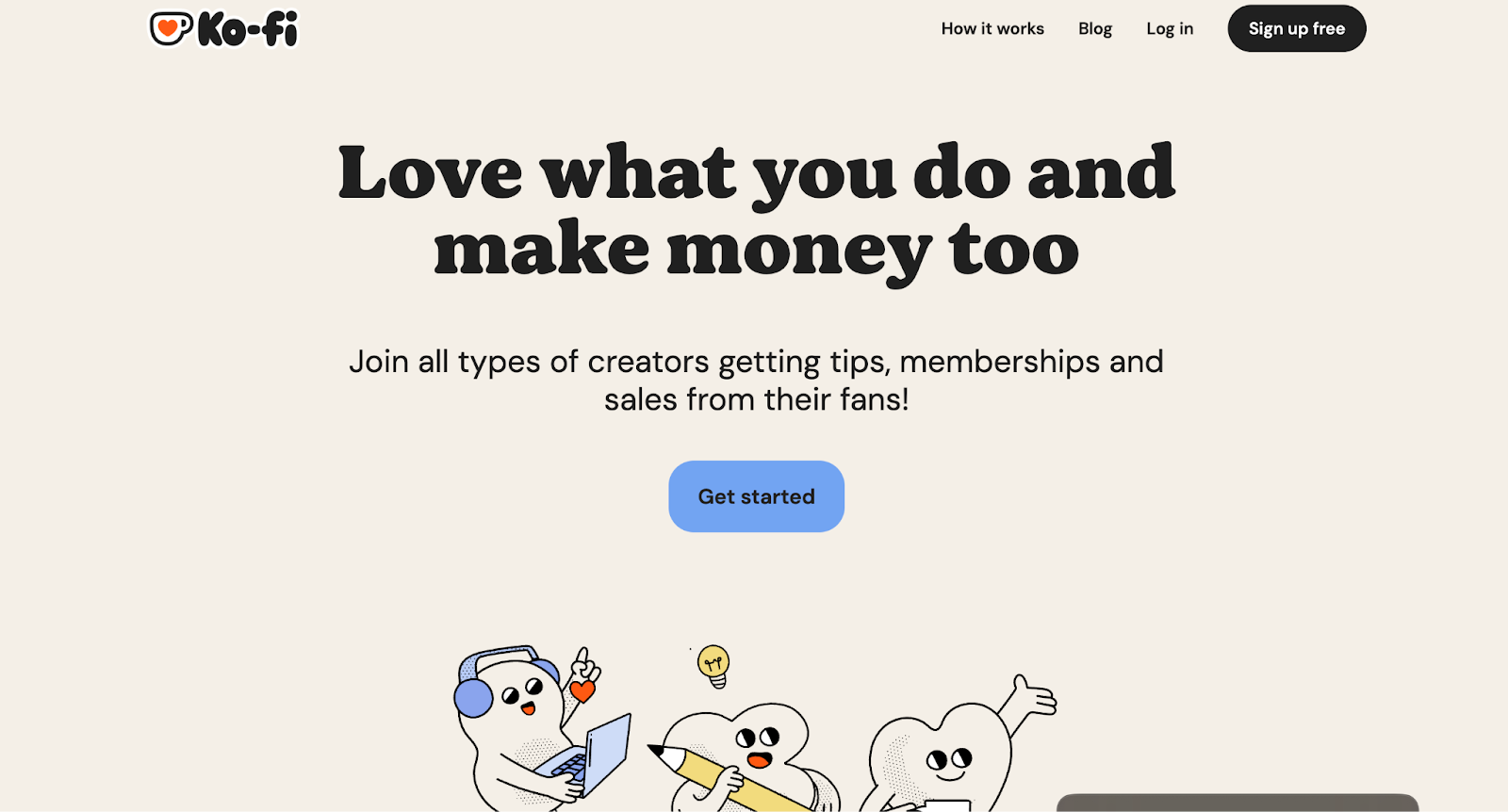
Overview: Ko-fi is a creator support platform that focuses on direct fan contributions rather than algorithm-driven discovery. It allows creators to accept tips, run memberships, take commissions, and sell products through a shop, with creators controlling pricing and distribution. Payments are sent directly to the creator’s connected PayPal or Stripe account.
Best for: Tips and one-time fan support.
Pros:
- Supports tips, memberships, commissions, and a shop for digital or physical products
- Sends payments directly to creators without holding funds on the platform
- Allows creators to control pricing, terms, and how their page is shared
- Operates without algorithmic discovery, relying on creator-driven promotion
Cons:
- Does not always display clear error messages when signup or account issues occur
- Can be slow to resolve account-specific technical support requests
- Has reported inconsistencies between promotional materials and available product features
6. Medium Partner Program
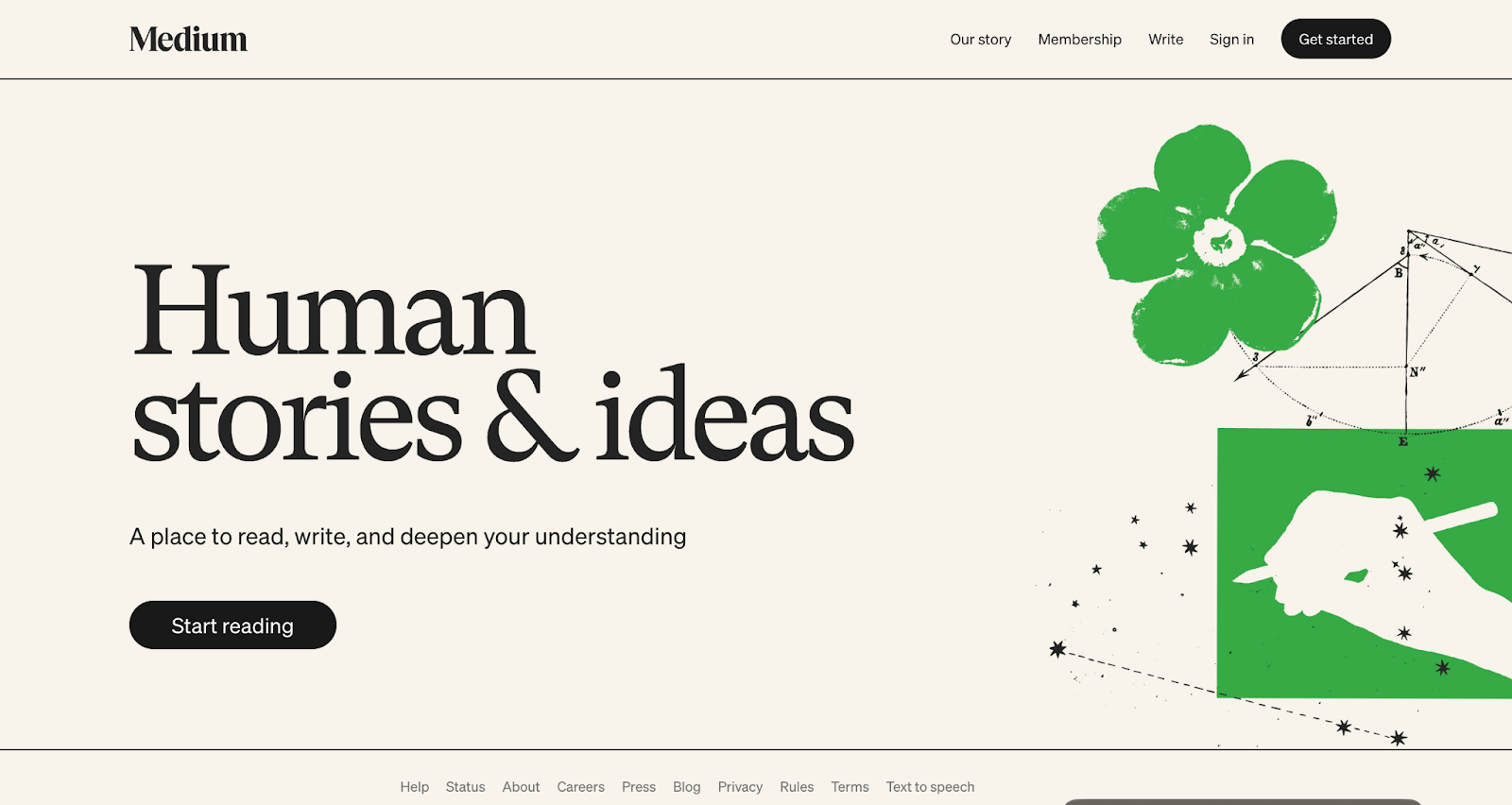
Overview: The Medium Partner Program allows writers to earn money based on how Medium members engage with their stories. Earnings are tied to member reading time and interactions rather than ad impressions or direct subscriptions. Medium manages distribution, offering access to its existing audience but keeping content within its platform.
Best for: Writers earning from reader engagement.
Pros:
- Pays writers based on member read time and engagement
- Provides access to Medium’s built-in audience without requiring external promotion
- Supports long-form and thoughtful content rather than click-driven publishing
Cons:
- Suspends accounts based on reports with limited evidence shared
- Has unresponsive customer support for billing-related issues
- Includes subscription fees that users report as unanticipated
7. Patreon
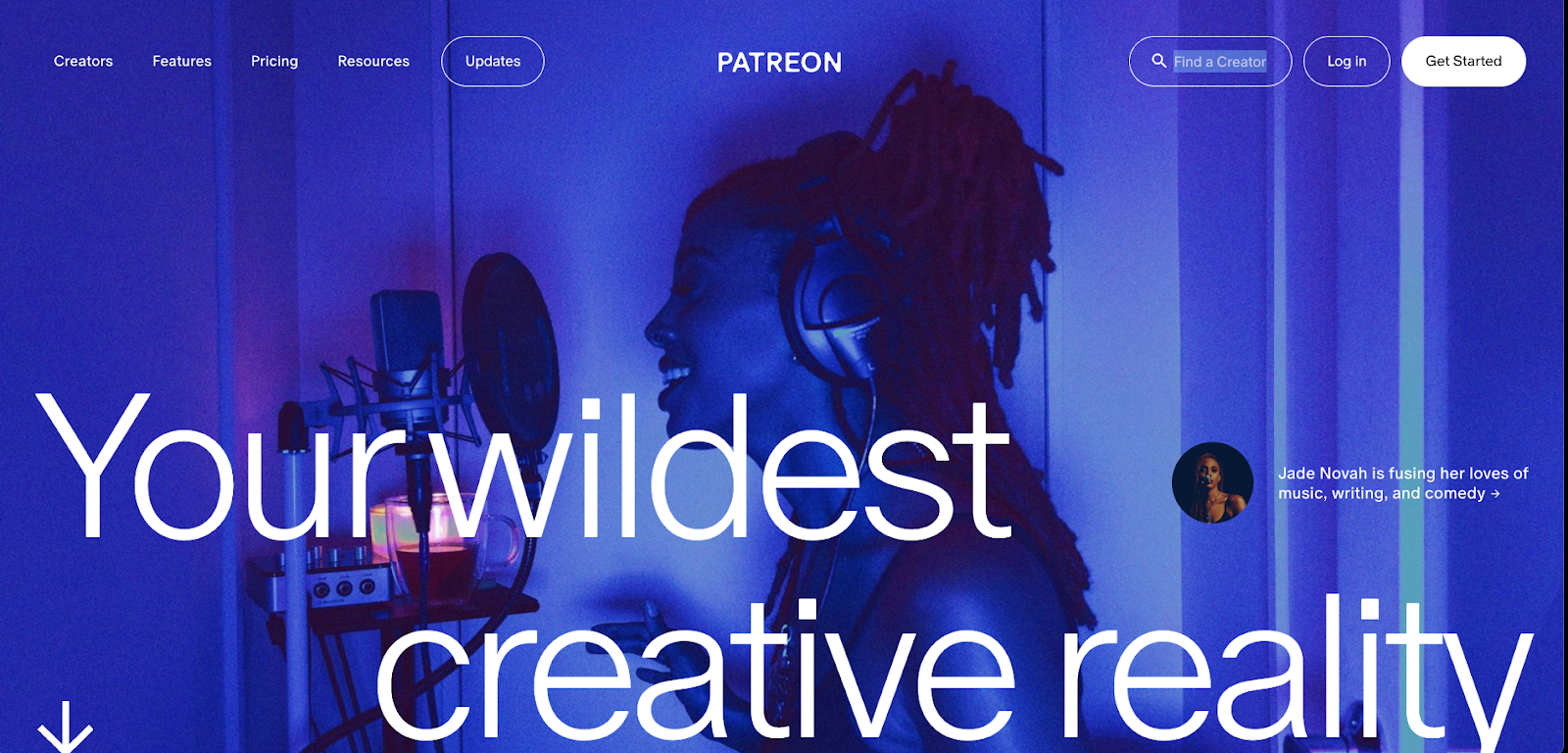
Overview: Patreon is a membership platform that allows creators to earn recurring income by offering exclusive content and experiences to their fans. Creators can run paid memberships, sell individual posts or products through a digital shop, and communicate directly with supporters through posts, messages, and community features. Patreon handles payments, access control, and member management within its ecosystem.
Best for: Membership-based monetization
Pros:
- Supports recurring memberships and one-time purchases through a built-in shop
- Provides tools for community engagement, including posts, comments, group chats, and direct messaging
- Offers analytics and relationship management tools to understand and manage supporters
- Allows creators to monetize without relying on ads or algorithm-driven distribution
Cons:
- Does not allow users to easily delete their accounts
- Has reported issues with recurring charges continuing after cancellation
- Provides unresponsive or ineffective customer support for creators and subscribers
8. Skillshare
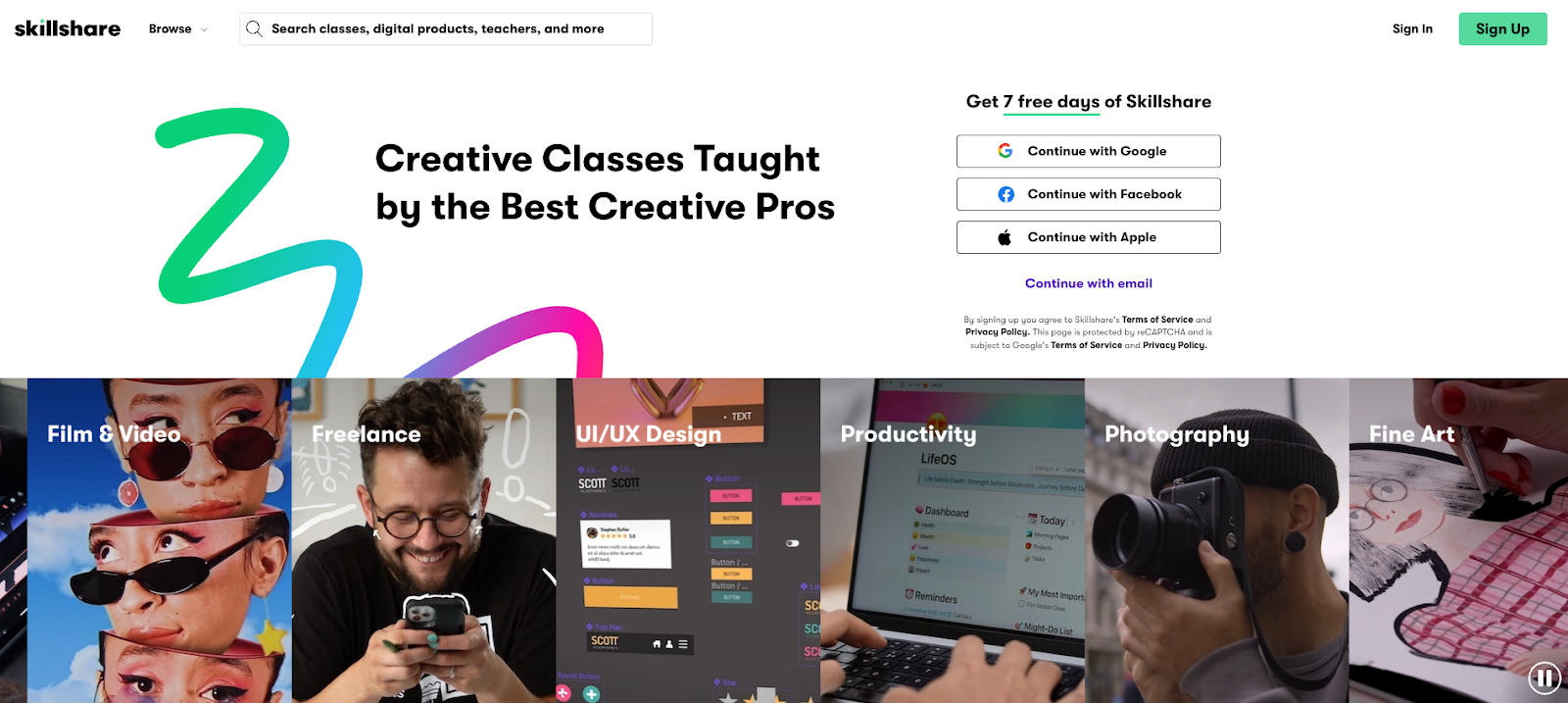
Overview: Skillshare is an online learning platform where creators publish classes that are available to members through a subscription model. The platform focuses on creative and professional topics, including design, illustration, video, photography, marketing, and productivity. Skillshare manages hosting, distribution, and member access, with creator earnings tied to class engagement.
Best for: Online classes and educational content
Pros:
- Hosts classes across a wide range of creative and professional categories
- Uses a subscription model that gives classes access to an existing member base
- Supports video-based lessons with structured class formats
- Includes analytics for tracking class performance and student engagement
Cons:
- Does not offer refunds when canceling on the same day as a payment
- Has sign-in and account management issues that can prevent users from switching or signing out of accounts
- Deactivates accounts without a clear explanation and provides limited or delayed support responses, even for active subscribers
9. Substack
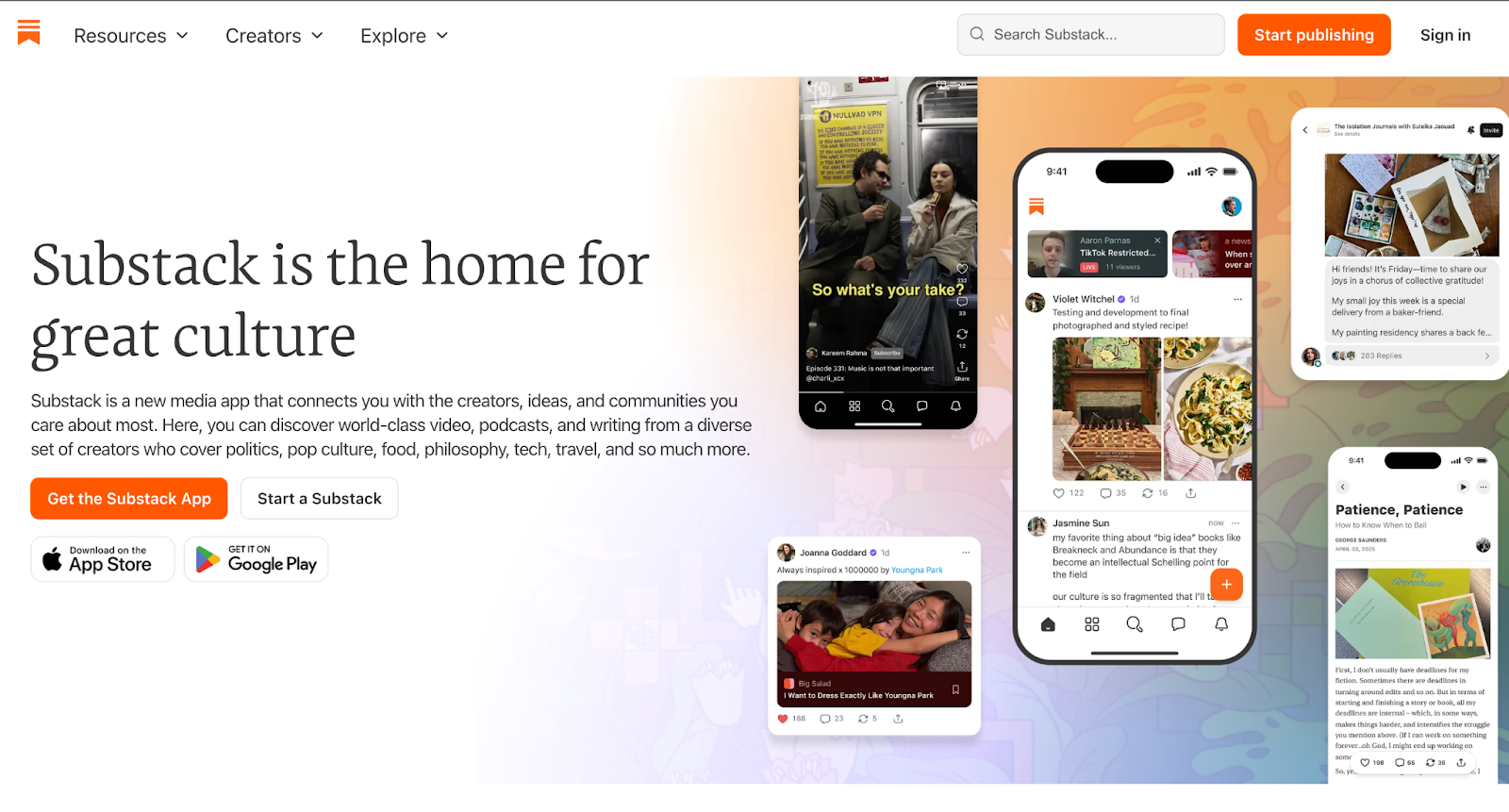
Overview: Substack is a publishing platform centered on email newsletters with built-in subscription support. Creators publish posts that are delivered directly to subscribers’ inboxes, with options for free and paid content. Substack handles hosting, email delivery, payments, and subscriber management, with content primarily hosted on the Substack platform rather than on a creator-owned site.
Best for: Subscription-based newsletters
Pros:
- Supports free and paid newsletter subscriptions with integrated email delivery
- Handles payments, subscriber management, and hosting in one platform
- Allows creators to export subscriber lists and content if they leave the platform
- Includes built-in discovery features that can help attract new readers
Cons:
- Uses an AI-based support chat that may not resolve issues or escalate to a human agent
- Limits reader engagement and feedback options for writers
- Delays the return of funds in some user cases
10. Teachable
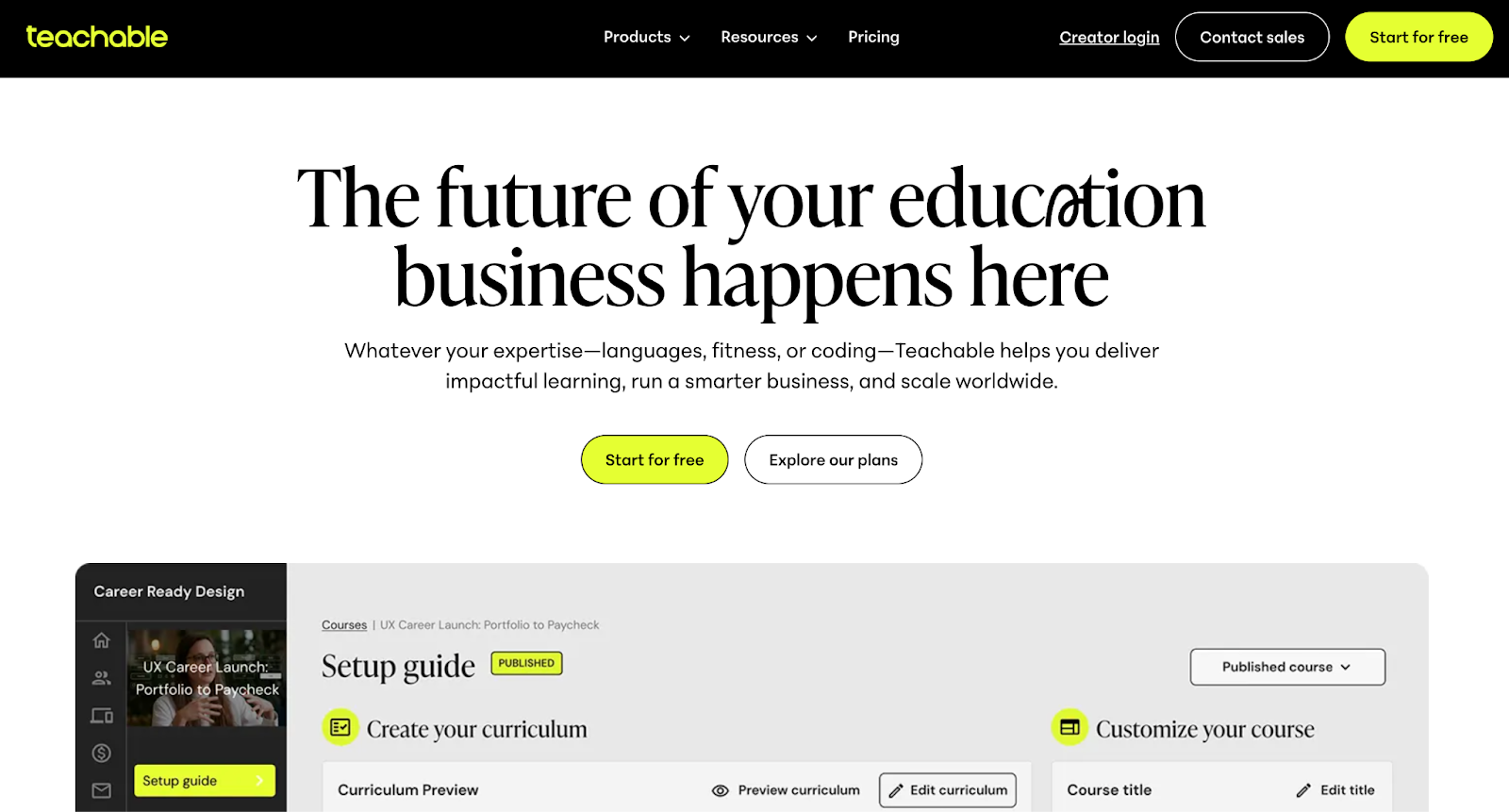
Overview: Teachable is an online course platform designed for creators and educators selling structured learning products. It allows creators to build and host courses, manage student access, accept payments, and deliver lessons through a branded course site. The platform supports video lessons, quizzes, certificates, and memberships, with Teachable handling hosting, checkout, and course delivery.
Best for: Course creators
Pros:
- Supports structured courses with video lessons, quizzes, and certificates
- Includes tools for managing students, access, and payments
- Offers memberships, coaching, and digital downloads alongside courses
- Provides integrations and APIs for connecting with other tools
Cons:
- Does not support offline access to paid course content
- Repeats troubleshooting steps in some support cases without resolution
- Sends automated activity emails that may not reflect actual user actions
11. Teamhub.com
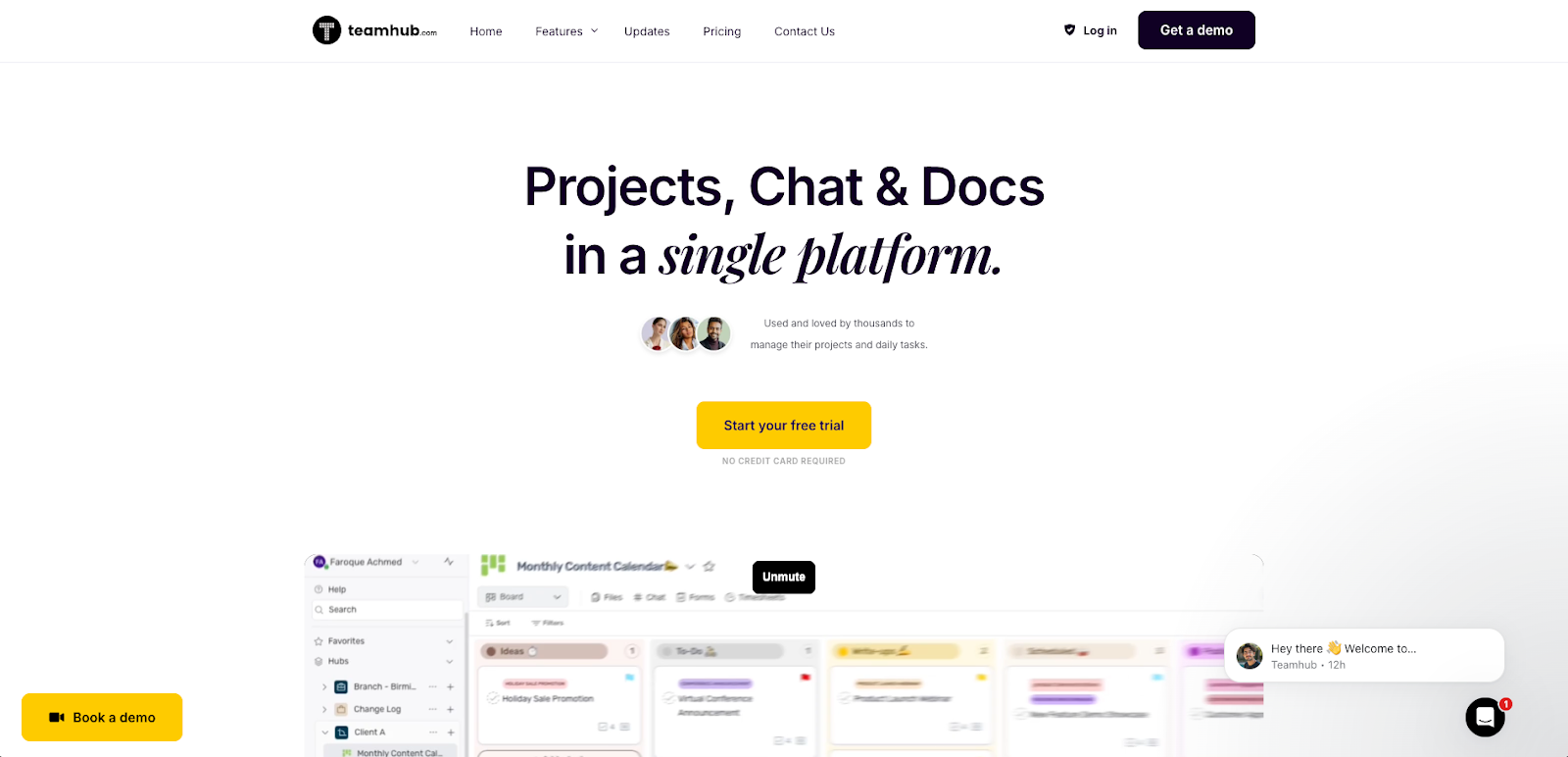
Overview: Teamhub is a collaboration platform that brings projects, team chat, documents, forms, and time tracking into a single workspace. It is designed to replace multiple tools by centralizing task management, communication, and documentation in one system. Teamhub focuses on internal collaboration rather than creator monetization, making it more suitable for teams than individual creators.
Best for: Project management and data apps
Pros:
- Combines project management, chat, documents, forms, and time tracking in one platform
- Supports multiple task views, including Kanban, list, calendar, and Gantt
- Includes built-in team chat with the ability to convert messages into tasks
- Offers a document editor for internal wikis, handbooks, and knowledge bases
- Provides forms and automations to streamline task intake and workflows
Cons:
- Is still in early stages, with some features under development
- Does not currently support recurring tasks
12. TikTok
Overview: TikTok is a short-form video platform where creators publish content to a large, algorithm-driven audience. Monetization options are built into the platform and vary by region, eligibility, and creator activity. TikTok handles content distribution, audience discovery, and monetization access within its ecosystem.
Best for: Short-form video content.
Pros:
- Provides access to a large global audience through algorithm-driven discovery
- Supports multiple monetization options for eligible creators, including creator funds, and subscriptions
- Allows creators to monetize directly within the platform without external tools
- Offers analytics and performance insights for tracking content and audience engagement
Cons:
- Includes frequent ads and repetitive content that can reduce the overall user experience
- Provides limited access to human support for account, moderation, or monetization issues
- Allows scams and misleading links to circulate through shop features and shared links
13. Vimeo
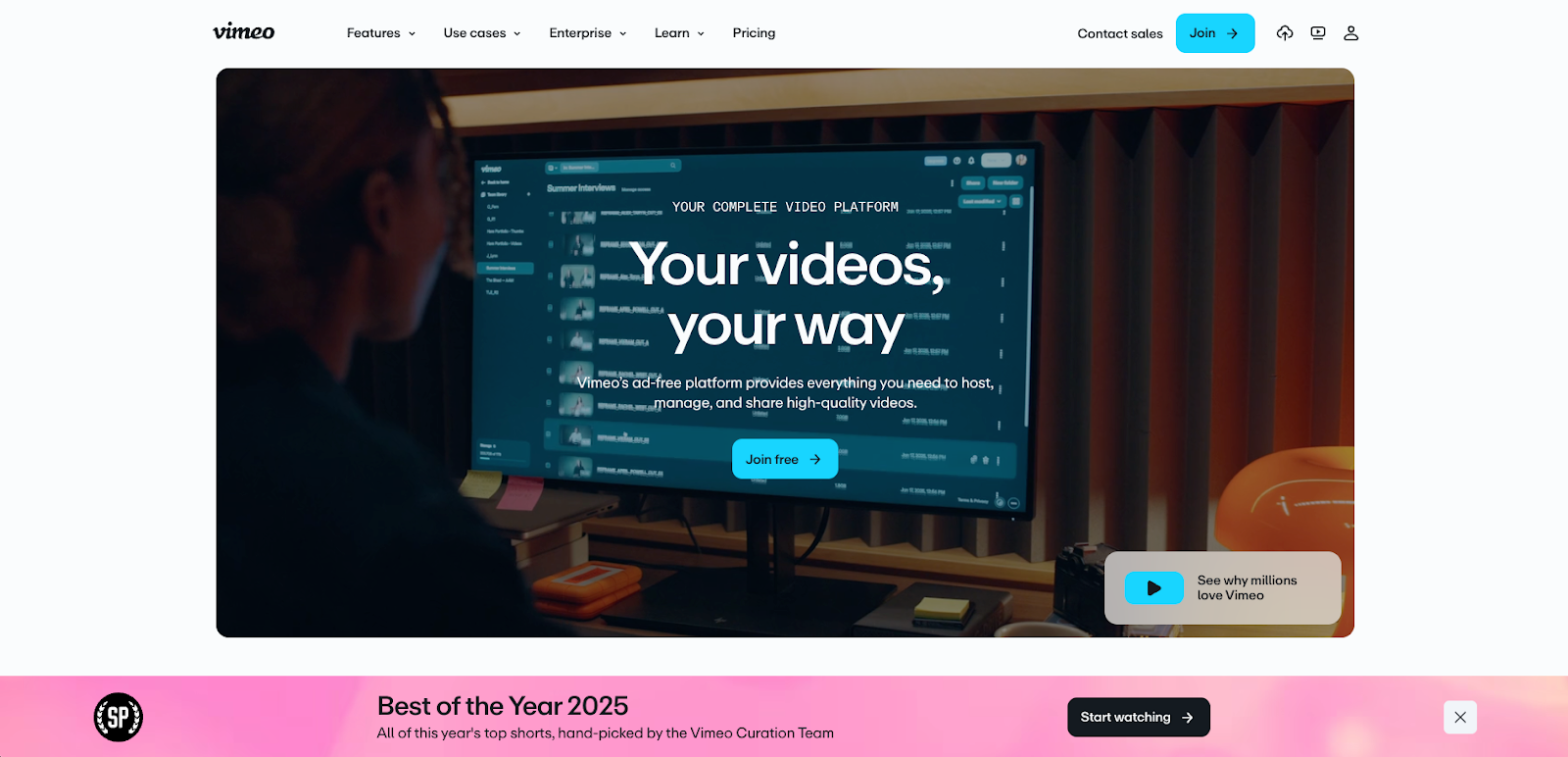
Overview: Vimeo is a video hosting and distribution platform focused on high-quality video playback and creator control. It allows creators to upload, manage, and share videos without ads, while offering tools for privacy, customization, and professional presentation. Vimeo also supports video sales, subscriptions, and embedded playback on external websites.
Best for: Professional video hosting
Pros:
- Supports high-quality, ad-free video playback
- Offers strong privacy controls, including password protection and domain-level restrictions
- Allows video embedding with customizable players and branding options
- Supports video monetization through rentals, purchases, and subscriptions
- Includes analytics and video performance insights
Cons:
- Provides unresponsive customer support with limited access to human assistance
- Has playback and embedded video issues that can make hosted content difficult or impossible to watch
- Has a dated and clunky interface that makes organizing and managing videos difficult
14. Wix
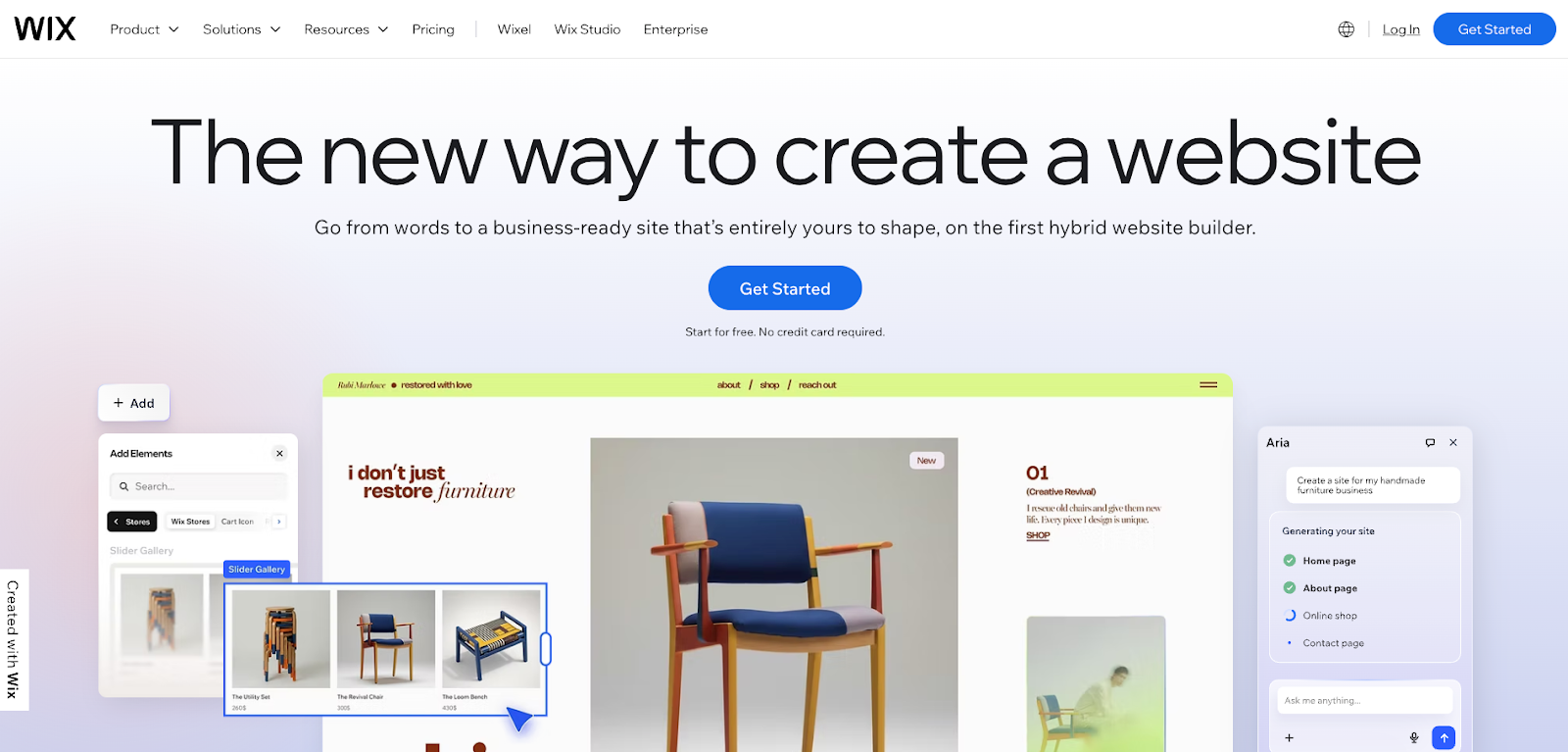
Overview: Wix is a website builder that lets creators and businesses build and manage websites with a visual editor. It supports content publishing, eCommerce, bookings, and digital product sales within a single platform. Wix handles hosting, templates, and site infrastructure, while creators manage design and content.
Best for: Website and online store creation
Pros:
- Provides a visual drag-and-drop editor for building and updating websites
- Supports eCommerce, digital product sales, and service bookings
- Includes built-in hosting, templates, and site management tools
- Offers integrations with third-party apps and services
Cons:
- Has unresponsive customer support with no direct phone access and delayed responses
- The platform processes charges after cancellation, including for unpublished or inactive sites
- Website builder can feel clunky and time-consuming for simple tasks
15. Youtube
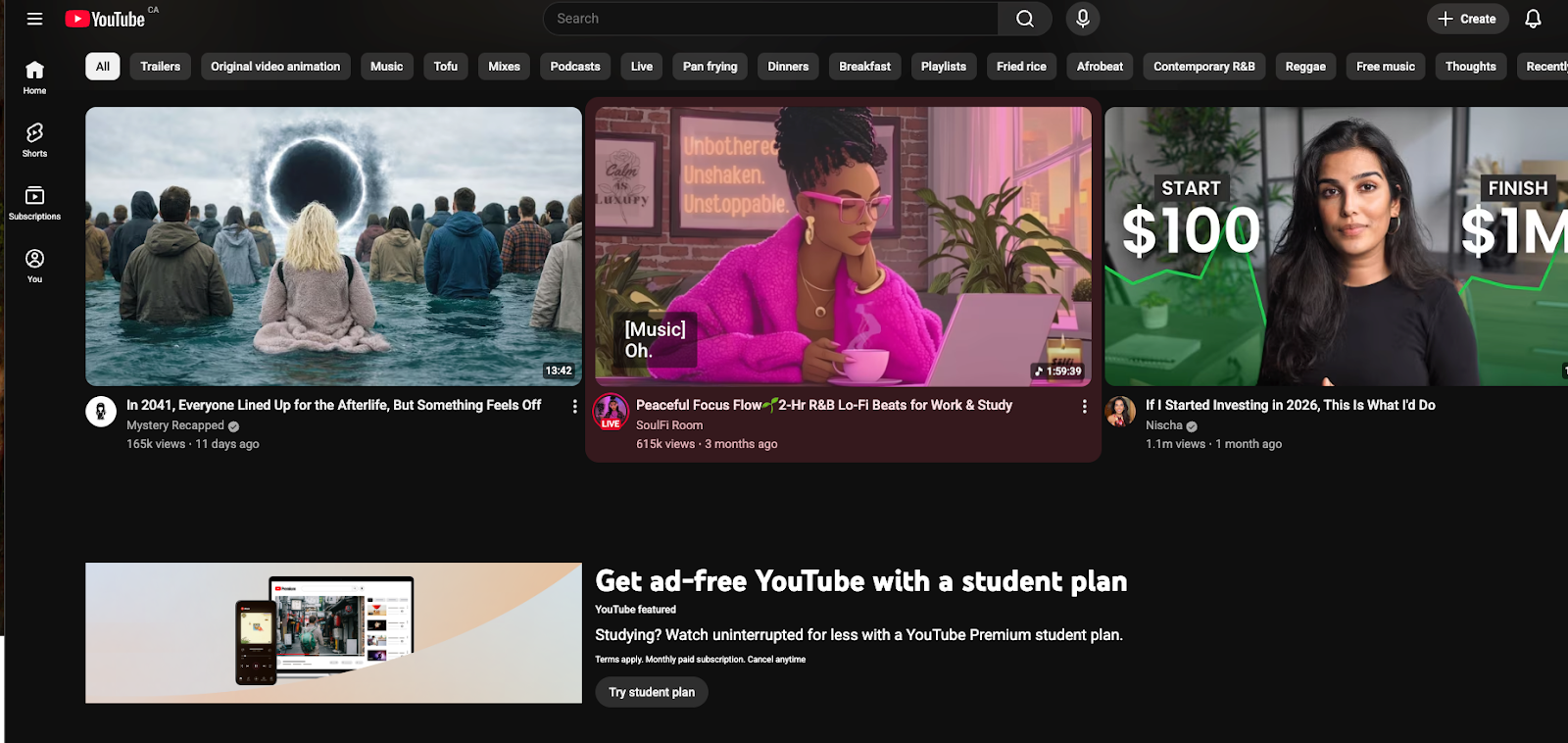
Overview: YouTube is a video publishing platform where creators upload long-form and short-form videos to a global audience. Monetization is built into the platform and depends on eligibility, audience size, and engagement. YouTube manages hosting, distribution, and monetization access through its ecosystem.
Best for: Long-form video content
Pros:
- Provides access to a large global audience through search and recommendations
- Supports multiple monetization options, including ads, channel memberships, and shorts revenue sharing
- Includes YouTube Studio for analytics, content management, and audience insights
- Allows creators to host and monetize videos without managing external infrastructure
Cons:
- Has account security issues and limited support, which can reduce trust and reliability
- Displays ads from scam or fraudulent companies, raising concerns about ad oversight and user safety
- Has performance issues, including slow loading, freezing videos, and repetitive recommendations
16. Zanfia
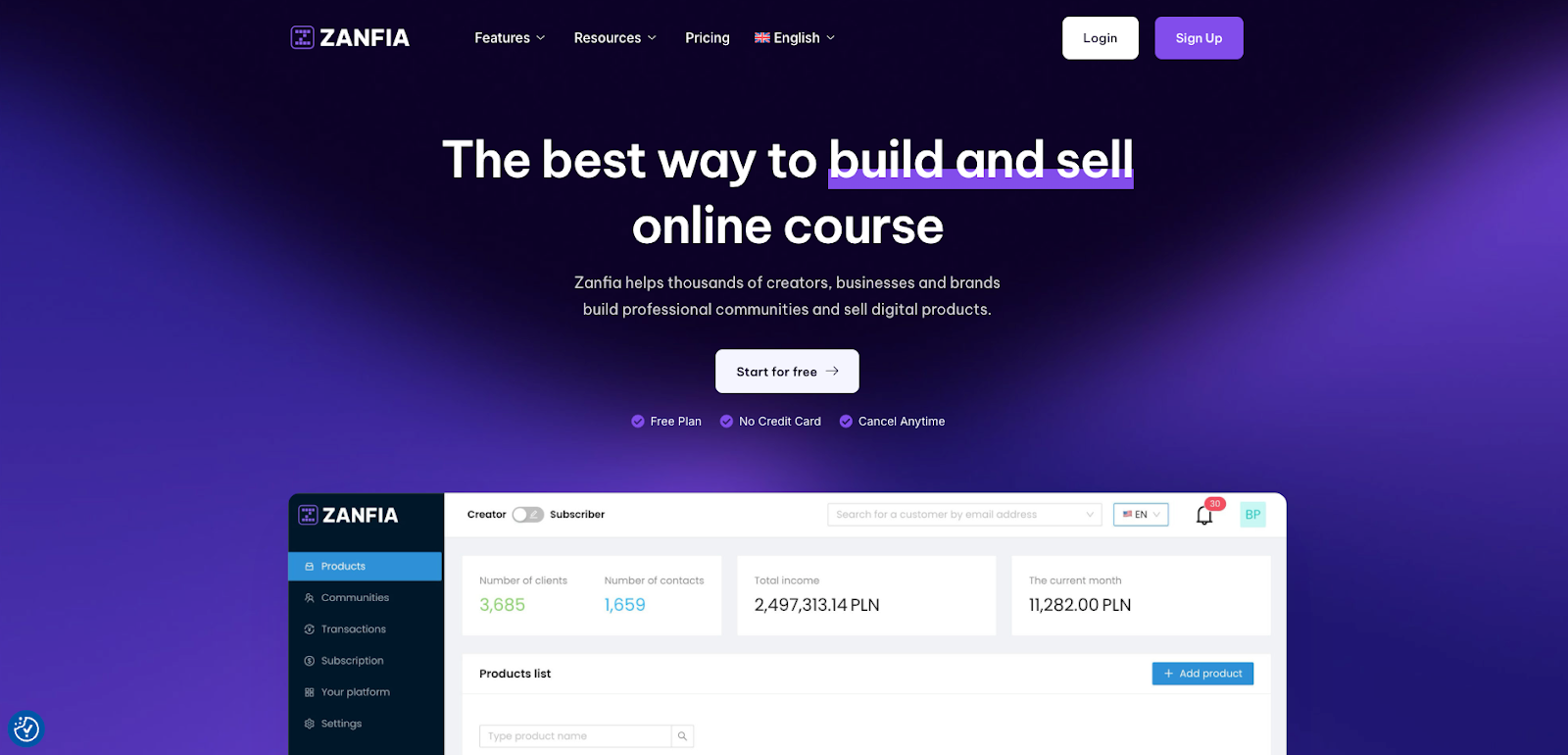
Overview: Zanfia is a creator monetization platform designed to help creators sell digital products, subscriptions, and gated content directly to their audience. It focuses on giving creators ownership of their content and customer relationships while handling payments and access management. Zanfia positions itself as a lightweight alternative to larger, more complex platforms.
Best for: Digital products and paid content
Pros:
- Supports selling digital products, subscriptions, and gated content
- Provides tools for managing payments and customer access in one place
- Allows creators to maintain ownership of their audience and content
Cons:
- Offers a more limited feature set compared to larger, all-in-one creator platforms
- Focuses primarily on digital products and gated content, with fewer advanced community or engagement tools
- Provides less brand recognition and ecosystem reach than more established creator platforms
How to Choose the Right Monetization Platform (And Mistakes to Avoid)
Choosing the right monetization platform comes down to being clear about what you actually need right now, not what looks impressive on paper. Start by looking at your content type, how involved you want to be day to day, and how your audience prefers to support you. Some platforms are built for scale through ads, others prioritize subscriptions, and some focus on direct fan relationships. The biggest mistake creators make is picking a platform based on hype instead of fit. Another common issue is relying too heavily on a single revenue stream or underestimating fees, payout rules, and content restrictions. It is also easy to overcomplicate things too early. You do not need every monetization feature on day one. A simple setup that you can manage consistently will outperform a complex system you cannot maintain.
To avoid problems later, prioritize platforms that give you flexibility as you grow, clear control over pricing and access, and ownership of your audience relationship. Monetization works best when it feels like a natural extension of your content, not a barrier between you and your audience.
The best creator monetization platforms are the ones that support how you already create and give you room to grow without adding unnecessary complexity. If you have an engaged audience and want more control over how you earn, direct-to-fan platforms are often the logical next step. Passes allows creators to turn attention into income through memberships, exclusive content, paid messages, and direct fan access, all in one place and without relying on algorithms. For creators ready to build more predictable revenue from their audience, Passes provides the tools to do that directly.
FAQs on Creator Monetization Platforms
What is the most profitable platform for creators?
There isn’t a single platform that’s most profitable for everyone. How much a creator earns depends on factors such as audience size, engagement, content format, and the effectiveness of monetization. Some creators earn more through subscriptions, others through digital products, direct fan access, or a mix of revenue streams. In general, platforms that allow creators to diversify how they earn and maintain direct relationships with their audience tend to offer higher long-term earning potential.
Passes allows creators to combine multiple monetization methods in one place, including memberships, paid messages, livestreams, and one-on-one access, helping increase revenue consistency and reduce reliance on a single income source.
What platform is best for monetization?
The best monetization platform depends on what you sell and how you want to earn. Some platforms are better for memberships, others for digital products, courses, or ad-based revenue. Creators who want flexibility and control often look for platforms that support several monetization methods in one place, rather than relying on a single income stream. For creators with an established audience who want to monetize through memberships, exclusive content, and direct fan interaction, Passes allows creators to monetize in multiple ways, including memberships, exclusive content, paid messages, and live interactions, making it a practical option for creators who want flexibility and direct control over how they earn.
Is Patreon declining in popularity?
Patreon is still widely used and remains a familiar option for memberships and fan support. That said, some creators explore alternatives as their needs change, especially around fees, flexibility, or the types of monetization they want to offer. Rather than declining outright, Patreon is better described as more competitive than it once was, with creators now having many viable options depending on how they want to earn and engage their audience.
Which social media platforms are best for creators now?
Short-form video performs well on platforms like TikTok and Instagram, while long-form video remains strong on YouTube. For written content and newsletters, platforms like Substack or Medium can work well. Most creators use social platforms primarily for discovery, then direct their audience to a separate monetization platform to generate consistent income.
Which platform is best for new creators?
Many creators start on free social platforms to test content ideas, understand what resonates, and build consistent engagement. As an audience grows and demand becomes clearer, monetization platforms start to make more sense.
For creators who already have traction and want to earn directly from their audience, Passes offers a way to turn that attention into income without relying on ads or algorithms. Creators can monetize through memberships, exclusive content, paid messages, livestreams, and one-on-one access, all in one place. This flexibility makes it easier to experiment with different revenue streams and build recurring income as a creator’s audience becomes more invested.